
The processes that create a seven per cent-plus GDP growth rate without a similar growth in jobs are far from fully understood, says Ajit Balakrishnan.
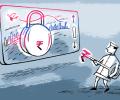
Indian policy-makers must see the choices before them as economic, not moral, ones, says Ajit Balakrishnan.

A new generation of scholars -- this time, sociologists and anthropologists, who hitherto have been busy with researching social practices of primitive tribes and social structures like India's caste system -- are starting to cast their eyes on the financial sector.

The international investors who are investing, merging and shaping India's new ecommerce start-ups are betting that if China can produce an Alibaba with an expected market value of $ 170+ billion market value when it does its IPO, India should produce at least one or two with a $5bn+ market value, says Ajit Balakrishnan.

The middle class's long push to force the state to retreat from the economy may be reversing, says Ajit Balakrishnan.

The power to cause societal pain, at least to some segments of society, is intrinsic to the nature of technological innovation.

Startups in India need low-cost debt for working capital, which is impossible to get.

The world awaits a creative breakthrough for mobile phone ads, says Ajit Balakrishnan.

Now, the world over, policymakers are dusting off their copies of Keynes' classic, The General Theory of Employment, Interest and Money, and figuring out whether there are any answers there to our own challenges of growing our economies.

Ajit Balakrishnan recalls some lessons from the last time people talked of 'convergence' -- the mid-1990s.

As the new ecommerce paradigm works its way through multiple sectors of the economy it is likely to encounter legal challenges, says Ajit Balakrishnan.

Ajit Balakrishnan reflects on pariahs, small businesses, and blockchains.

A new book may help companies in getting corporate social responsibility right, notes Ajit Balakrishnan.

Students' flagging interest in the written word is because of a generational digital divide, says Ajit Balakrishnan.

Perhaps one aspect of the way modern media particularly print and news television works need some soul-searching: Their tendency to "frame" news stories as a conflict between two personalities, says Ajit Balakrishnan.

Ajit Balakrishnan on mapping the Business Serengeti.

Regulating the internet only as a medium is somewhat similar to regulating electricity only as a driver of the TV industry

'Rapists do have families. I wanted to see how a father or mother would deal with it.' 'They go through shame as well and get discriminated from the rest of the village.' 'Why don't we show it that way?'

Facebook owns WhatsApp and Microsoft owns Skype, the two services that are at the centre of the current "net neutrality battle".

The Information Technology Act needs another tweak to allow a different kind of information intermediary to flourish, says Ajit Balakrishnan.

India needs to build an economic system that will provide adequate capital to budding entrepreneurs, says Ajit Balakrishnan.

A more rigorous training in core skills is required to boost the engineering talent in the country, instead of a varnish of 'soft skills', says Ajit Balakrishnan.

May be the strong United States growth will lead the world back to a period of growth and help us all put this painful recrimination behind us.

It is only gradually dawning on us that some of the information we have trustingly shared with commercial service providers can be used against us when we apply for a job or when we apply to admission to a college, says Ajit Balakrishnan.
.jpg)
If we can come up with ways of sharing property rights on the internet, why not do something similar in urban spaces, asks Ajit Balakrishnan.

Some 800 million or more Indians gaze at their mobile phones all day. Whoever can crack what's news on the mobile phone for them and their families, for a nominal payment of Rs 10 a month, is a winner, says Ajit Balakrishnan.

Why, centuries after the French Revolution promised an end to feudalism, do political dynasties persist -- even in democracies, asks Ajit Balakrishnan.

Silicon Valley is at the heart of the transformation of the global economy -- which has both winners and losers, writes Ajit Balakrishnan.

Ajit Balakrishnan on understanding the anti-cash chorus.

Ajit Balakrishnan rewinds to a decade when mobile phones were unheard of and when an IIM degree had a different purpose and value.

India will have to deal with the question of whether broadband service providers are 'common carriers', like highways.

Is the internet just a fun thing to do like TV and radio?

Neither pharma nor IT would have become the stars of the economy without the active but largely invisible hand of the Indian State, says Ajit Balakrishnan.

The four astronauts are -- Prashanth Balakrishnan Nair, Angad Prathap, Ajit Krishnan, and Shubhanshu Shukla -- Modi said at the Vikram Sarabhai Space Centre (VSSC) at Thumba near the Kerala state capital.

The polytechnic graduate is on the front line of our war to establish a vibrant manufacturing sector in India, says Ajit Balakrishnan.
The step forward in marketing could be a move to bypass the media and towards owning it directly, says Ajit Balakrishnan.

While the responses of the candidates were predictable, depending on which side they belonged to, an interesting point slipped through when Rahul Shewale cited the Dharavi Redevelopment Project as a scheme that would add to Mumbai's importance. No big infrastructural project in Mumbai, he said, could be successful without the Centre's nod.

'I had no idea that behind the charming, ever smiling Goan faces, there is so much complexity and history!' says Ajit Balakrishnan.

Across the world, middle class families are dealing with the consequences of competition to get into high-quality institutions.

A minor fix in tax laws can make start-ups bloom, says Ajit Balakrishnan.
